
A Level Geography Students Put Fieldwork into Practice in Porthcawl
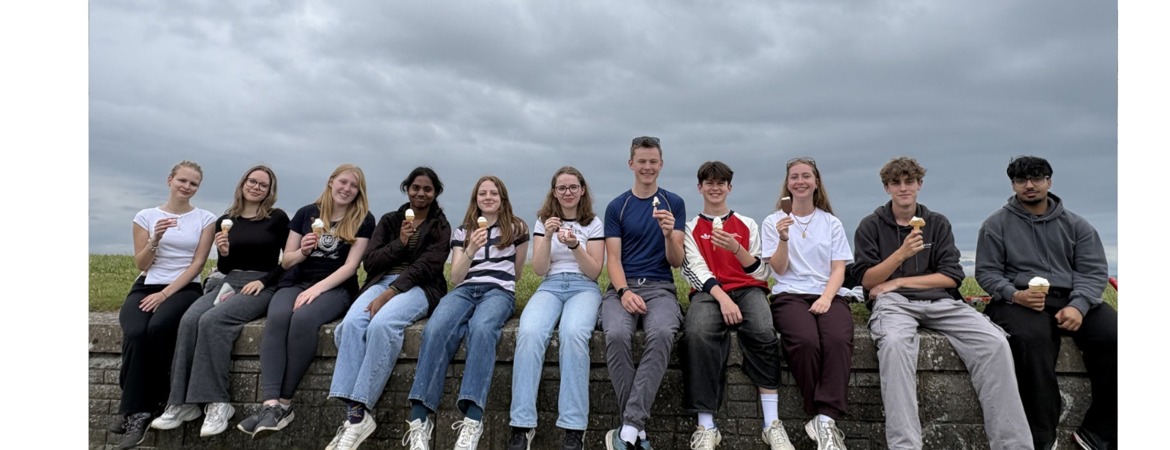
Our A Level Geography students recently travelled to Porthcawl, South Wales, to complete the fieldwork for their Non-Examined Assessment (NEA), which contributes 20% of their final A Level grade.
The residential field trip provided students with the opportunity to apply geographical theories and research techniques in a real-world environment, developing valuable skills in data collection, analysis and independent investigation.
Students were able to choose between a Human Geography or Physical Geography investigation, allowing them to explore topics that matched their interests while gaining first-hand experience of professional geographical fieldwork.
Physical Geography Investigation
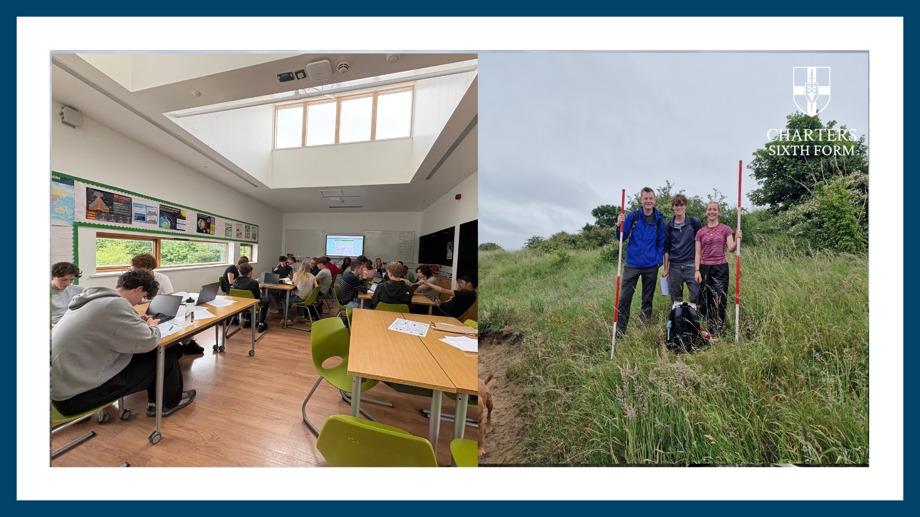
Students undertaking the Physical Geography investigation focused on either the impact of coastal management or sand dune systems.
Fraser explained:
"We chose to investigate either the impact of coastal management or sand dune systems. Students studying the impact of coastal management carried out Environmental Impact Assessments (EIAs), beach profiles, sediment analysis and questionnaires. Those investigating sand dunes conducted species richness surveys, measured abiotic factors such as wind speed and light intensity, and recorded dune profiles to assess the gradient of the slopes."
These investigations enabled students to collect a wide range of primary data while developing practical fieldwork techniques that are essential for their coursework.
Human Geography Investigation
Students completing the Human Geography NEA examined the impact of regeneration within Porthcawl and how it has affected different stakeholders.
Max said:
"We explored how regeneration has affected different stakeholders, including local communities and businesses. We used a variety of data collection methods, ranging from environmental quality surveys to crime prevention mapping. By combining quantitative and qualitative techniques, we were able to gather a wide range of data. Meeting members of the Porthcawl community and hearing their diverse opinions on the planned regeneration was particularly interesting and insightful."
The opportunity to engage directly with local residents and businesses gave students valuable insight into the complexities of urban regeneration and decision-making.
The field trip was an excellent example of learning beyond the classroom, allowing students to deepen their understanding of geographical concepts while developing research, teamwork and independent enquiry skills.
Reflecting on the experience, the students commented:
"The whole experience was fantastic, as it allowed us to bring our classroom learning to life while also enjoying time with friends and watching the World Cup in the evenings! A huge thank you to Miss Barrett and Miss Stockwell for organising such a memorable and valuable trip."
The Geography Department would like to thank Miss Barrett and Miss Stockwell for organising such a successful visit, providing students with an invaluable opportunity to apply their learning in the field while creating lasting memories with their classmates.